In most firms I have worked with, sending a bill is the easy part. The hard part starts a few weeks later.
The due date passes. Someone has to notice. Someone has to decide whether to call the client, and who should do it: the partner who knows them, the associate on the matter, or the accounts officer who has never met them. A polite WhatsApp goes out. The client replies, “I paid last week.” Now someone is scrolling through bank alerts to check, and a reminder that should have taken two minutes has taken half a morning.
Nobody’s job description says “chase fees”. So it becomes everybody’s job, which in practice means it is nobody’s job until the bill is late.
When I designed billing in FirmStack, I started from that gap rather than from the invoice.
The bill follows up for you
When you send a bill from FirmStack, you choose how often it should remind the client: every day, every 3 days, every 7 days, or not at all. FirmStack emails the client a link to the bill, showing your bank details and what is still owed, until the bill is paid. When the balance reaches zero, the reminders stop on their own.
That one choice, made once when the bill goes out, takes the place of the question “has anyone followed up?”
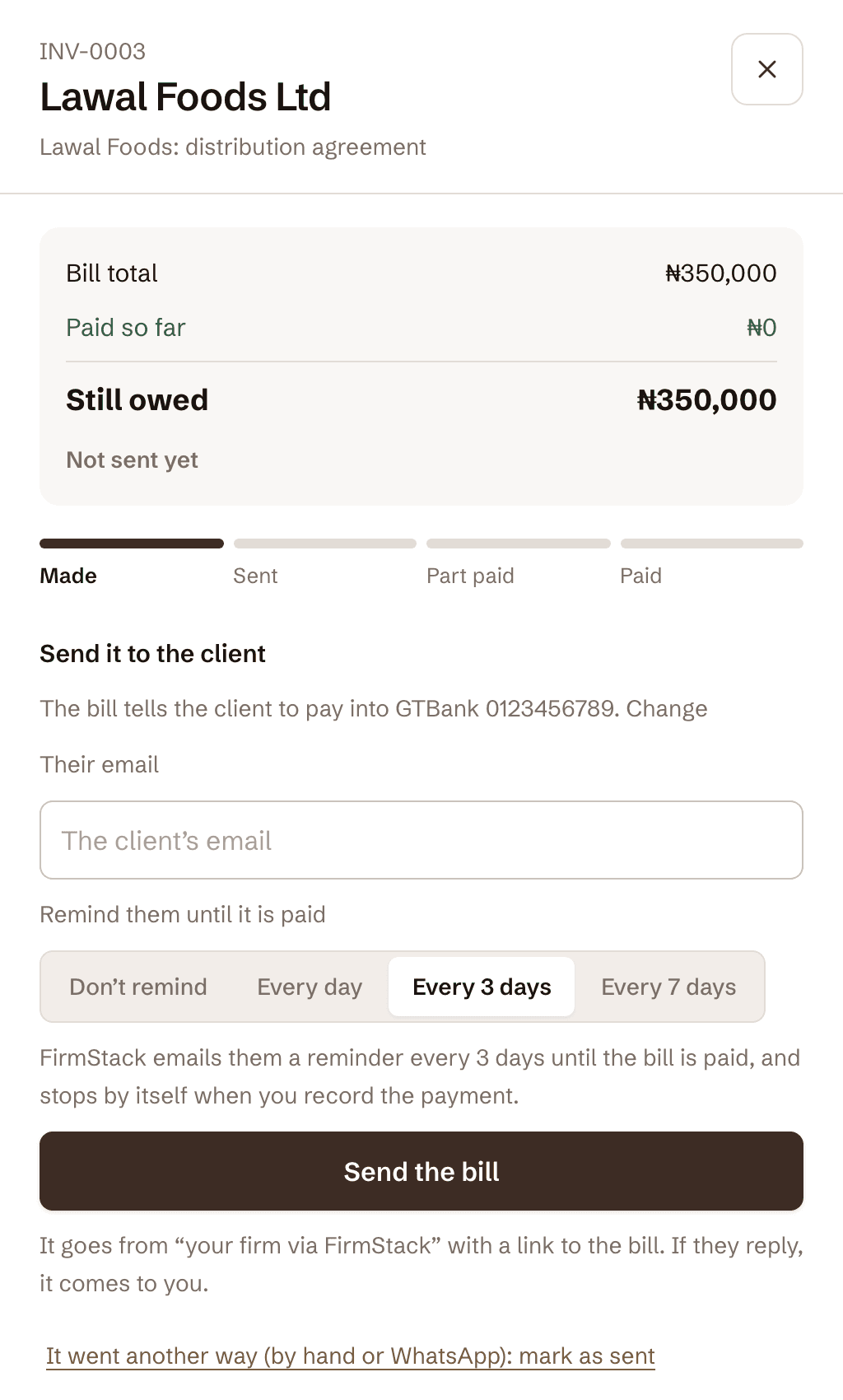
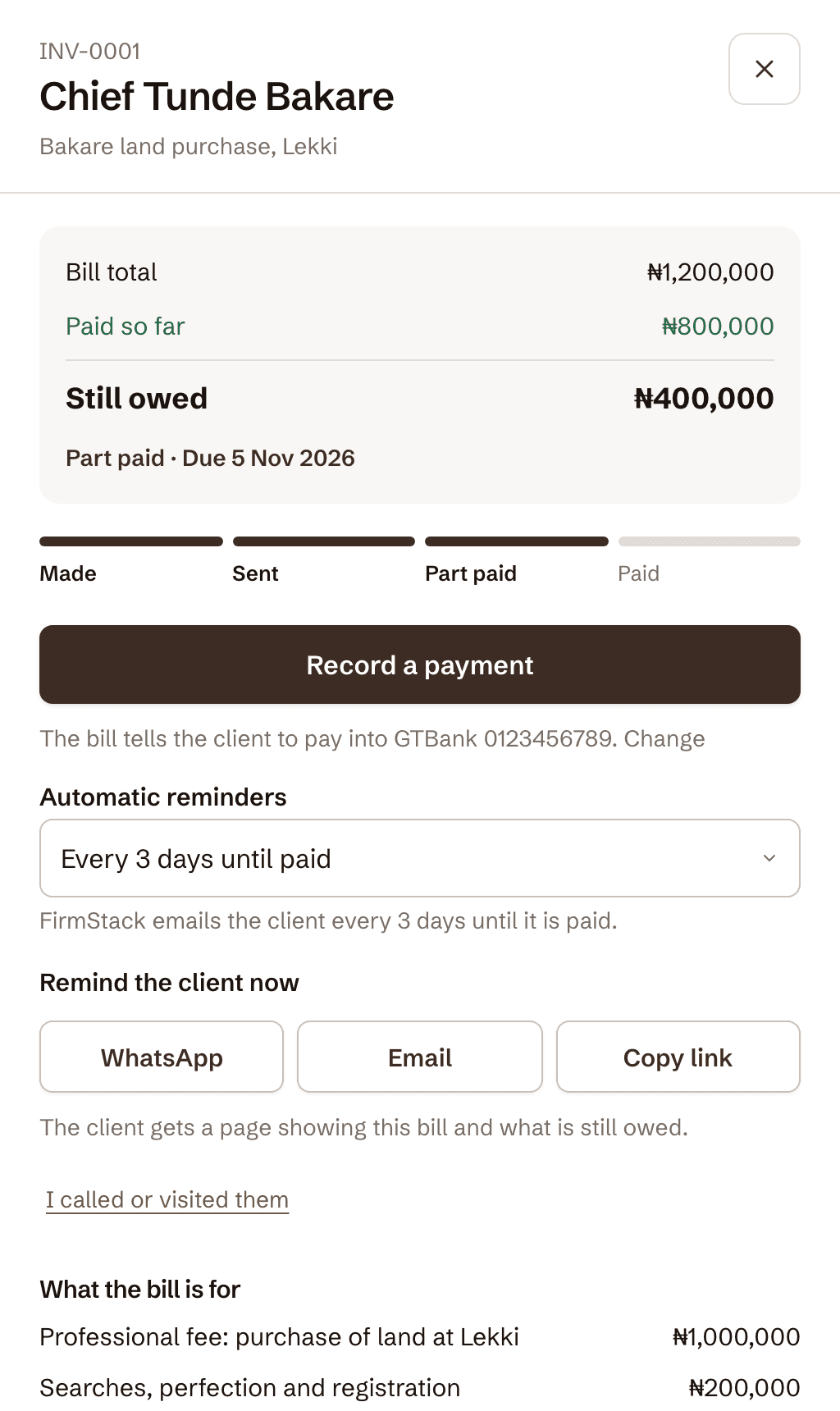
Some bills need a personal touch. Those options are on the bill too: send the client the link on WhatsApp, email it, or copy it. If you called or visited the client instead, you can note that as well. Every reminder goes into the bill’s history, so a partner can see what has been done without asking around the office.
When the client says “I have paid”
This is the decision I thought about most.
Automatic reminders are useful right up to the moment they chase a client for money they have already sent. For a law firm, that is not a small mistake. It means an awkward phone call, and a client wondering whether the firm keeps track of anything.
So on their bill page, the client can press I have paid and add the date and reference. The firm gets a notice and an email, the bill is marked “Client says paid · check it”, and the reminders pause straight away.
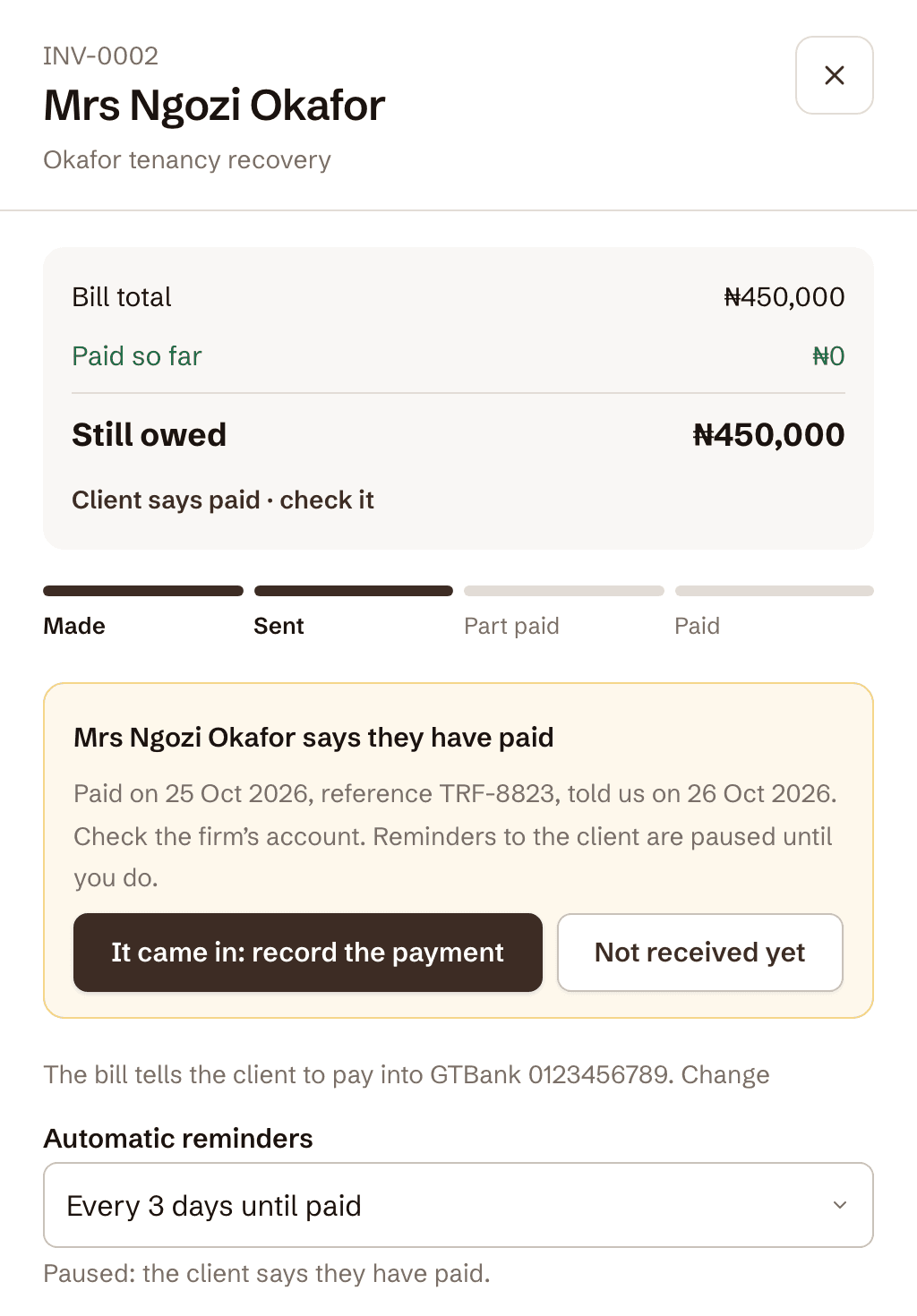
FirmStack does not treat the client’s word as payment, though. Someone at the firm still checks the account, then presses It came in: record the payment. If the money has not arrived, they press Not received yet, and the reminders start again. The pause protects the relationship; the check protects the books.
Part-payments without the arithmetic
Most clients do not pay a large bill in one transfer. Say you bill ₦1,200,000. The client sends ₦500,000, then ₦300,000 two weeks later. Each payment is recorded on its own, with its date and bank reference. The bill shows ₦800,000 paid and ₦400,000 still owed, and the reminders carry on for what is left.
When someone asks “has this client paid?”, the answer is on the bill, not in someone’s memory of a bank alert.
What it changes
The Billing page shows what is owed to the firm, what is late and the money received this month. Late bills are marked, with a Chase payment button beside each one.
None of this replaces a lawyer’s judgment about when to pick up the phone. It removes the work that should not need judgment: remembering, checking, and writing the same reminder for the fifth time.
Clients still pay into your firm’s account, exactly as they do now. FirmStack keeps the record; it never touches the money.
Try it with one of your own bills
FirmStack is live, and I am onboarding a small group of Nigerian firms. The first 30 days are free, and we set it up with you. If following up on fees takes more of your team’s time than it should, I would like to show you how this works with a bill from your own practice.